Notice
You are now leaving Polygon Restoration's website and will be directed to another country in the group.
Do you want to proceed?
Notice
You are now leaving Polygon Restoration's website and will be directed to another country in the group.
Do you want to proceed?

Cold storage facilities are designed to maintain controlled temperatures, but temperature alone does not guarantee a controlled environment. Moisture, humidity, and air infiltration can create challenges that impact safety, product protection, equipment performance, and operational efficiency.
One of the most common issues in refrigerated warehouses and storage facilities is condensation. When warmer air enters a cold space through dock doors, personnel entrances, or loading activities, the moisture in that air can condense on colder surfaces. Over time, this can lead to frost, ice buildup, slippery floors, and inconsistent environmental conditions throughout the facility. Moisture, humidity, and air infiltration can create challenges that impact employee safety, product protection, equipment performance, and overall operational efficiency.
One of the most common challenges in refrigerated warehouses, freezers, and cold storage facilities is condensation and ice buildup around door openings and high-traffic areas. When warmer, moisture-laden air enters a cold space through dock doors, personnel entrances, or daily loading activities, that moisture can condense on colder surfaces. Depending on conditions, it can also freeze, causing frost accumulation, ice buildup, slippery floors, and inconsistent environmental conditions throughout the facility.
Condensation is often a symptom of larger environmental control challenges. Refrigerated facilities regularly contend with air infiltration through dock doors, moisture intrusion from ambient air, temperature
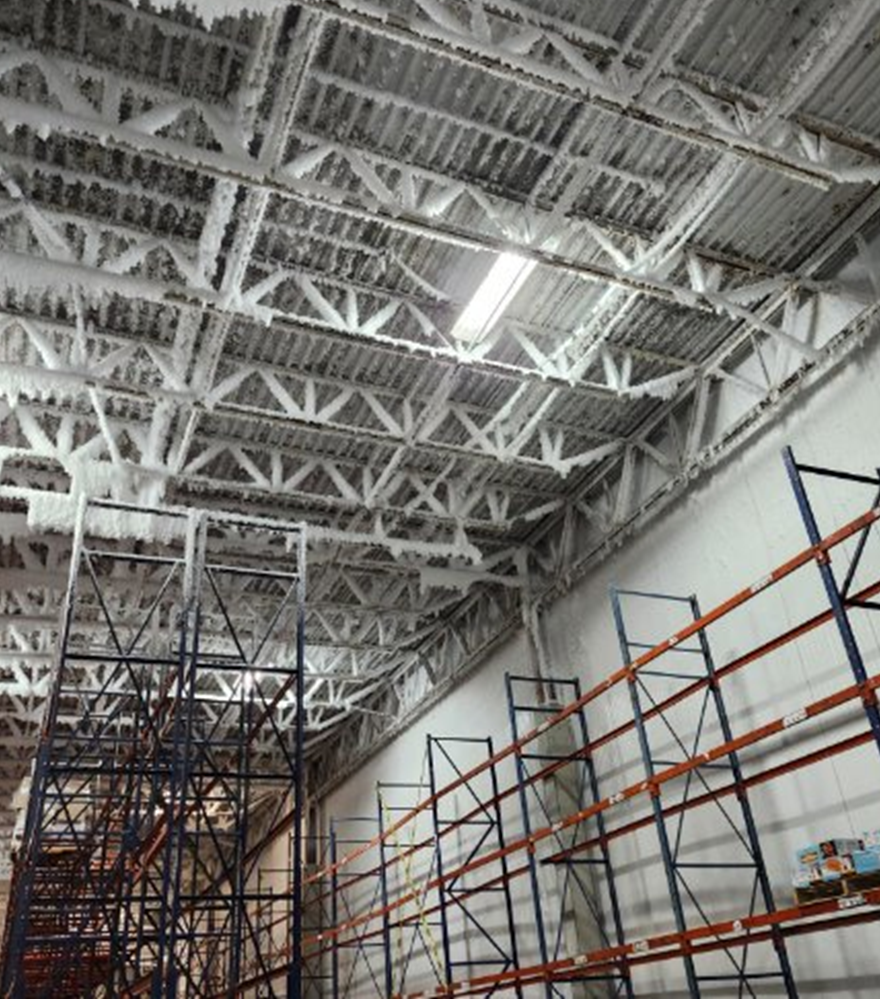
fluctuations, and the difficulty of maintaining consistent conditions across large spaces. These
factors can contribute to frost and ice buildup, increased energy consumption, and additional
strain on refrigeration systems.
The impact extends beyond maintenance concerns. Excess moisture can create slip hazards, affect packaging and stored products, and make it more difficult to maintain reliable operating conditions. Whether storing food products, pharmaceuticals, industrial materials, or other temperature-sensitive goods, controlling environmental conditions is essential to protecting inventory and supporting efficient operations. Condensation is often a symptom of broader environmental control challenges within cold storage facilities. Refrigerated environments regularly contend with air infiltration through dock doors and personnel entrances, moisture introduced by warmer ambient air, temperature fluctuations, and the difficulty of maintaining consistent conditions throughout large spaces. These factors can contribute to frost and ice buildup, increased energy consumption, and additional demands on refrigeration systems.
The impact extends beyond routine maintenance concerns. Excess moisture can create slippery floors and safety hazards, compromise packaging and stored products, and make it more difficult to maintain consistent operating conditions. Whether storing food products, pharmaceuticals, industrial materials, or other temperature-sensitive goods, managing both temperature and moisture is essential to protecting inventory, improving operational efficiency, and maintaining a safer working environment.
Condensation, frost, and ice are often the visible signs of an environmental issue that has been developing for days or even weeks. By the time moisture becomes noticeable, facilities may already be dealing with safety concerns, equipment inefficiencies, or inconsistent storage conditions.
A proactive approach starts with understanding what is happening inside the facility before problems occur. Monitoring temperature and humidity trends can help operators identify changing conditions, track environmental performance, and respond more quickly when risks emerge. Visibility into environmental conditions also provides a documented record that can support operational requirements and inform climate management decisions.
Effective moisture management often combines several strategies:
Together, these strategies can help facilities reduce moisture-related risks, improve visibility into environmental conditions, and maintain more consistent operations throughout the year.
Condensation is a common challenge in refrigerated warehousing and storage, but it does not have to be a recurring one. By combining climate control solutions with Digital Solutions that provide real-time visibility into environmental conditions, facilities can reduce moisture-related risks, improve operational reliability, and maintain greater control over their environment year-round.

Emergency Support
1-800-422-6379Send an email
us_info@polygongroup.com24/7 Hotline
Urgent equipment and operational support
Property damage
Documents and contents damage
24/7 Emergency:
United States: 1-800-422-6379
Canada: 1-888-702-4782
Your questions and comments are important to us. Please send us your information with a description of your needs and we will connect with you promptly.
Polygon US Headquarters
15 Sharpners Pond Road, Building F North Andover, MA 01845
Phone: 1-800-422-6379
See all our US locations here: Polygon US office locations
For global support, please contact one of our offices listed here: Our Global offices - Polygon Group